From Santiago Wanderers to Robinson Crusoe Island via a Malagasy club run by a suspected drug lord, football is full of bizarre stories. A new book by Paul Watson compiles 20 tales as wild as they are unexpected, from all corners of the globe. Dive into these footballing destinies that defy comprehension.
When football visits the most remote islands
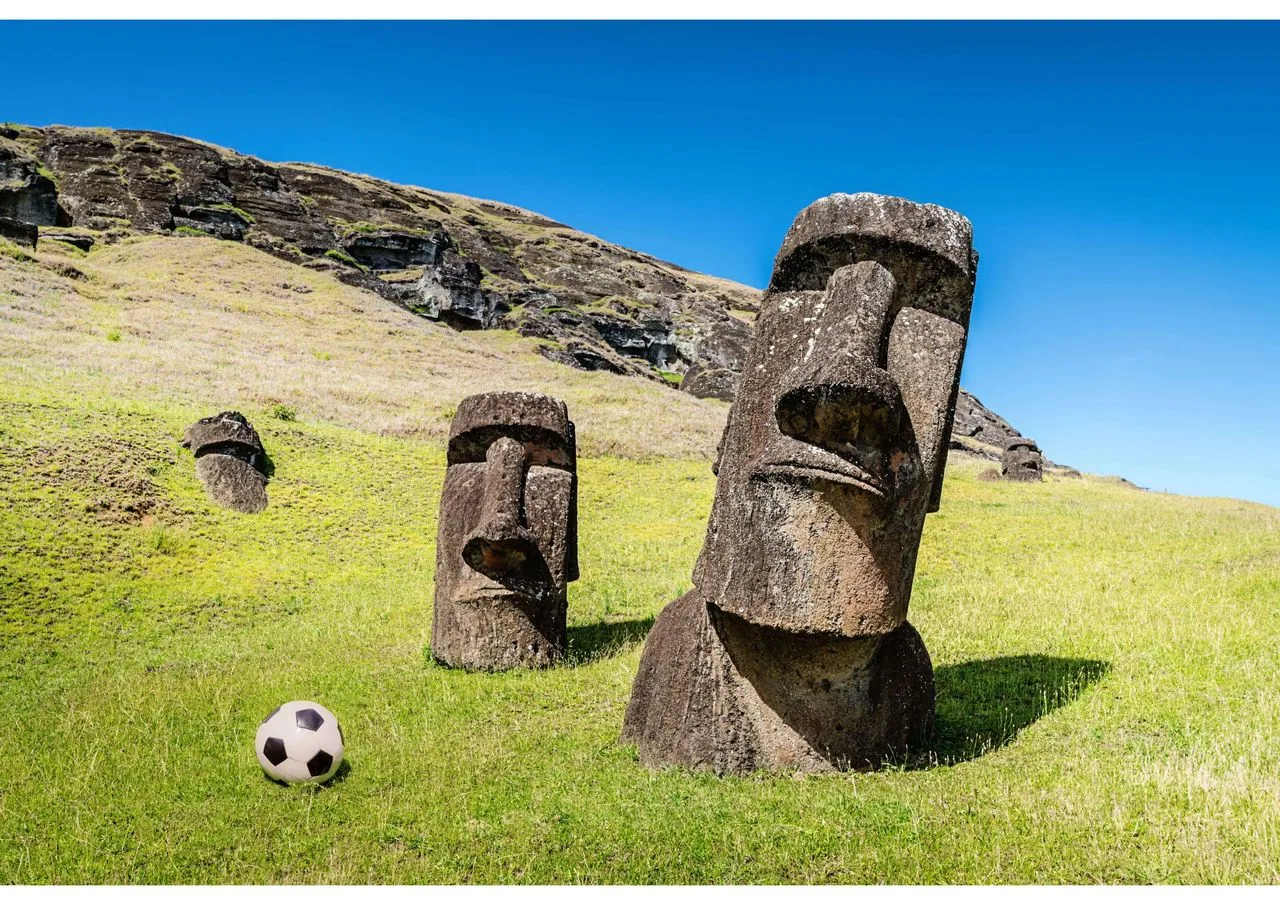
In 2024, Santiago Wanderers drew a Copa Chile match against a team from Robinson Crusoe Island, 400 miles off the Chilean coast. With no commercial flights available, the visitors boarded the Chilean navy ship Aquiles to face a local side made up of lobster fishermen. Despite their lack of preparation, the islanders held the professionals to a draw before losing by a single goal (2-1). In 2009, Easter Island (Rapa Nui) had already hosted Colo-Colo, Chile’s champions. The home side opened the match with a Polynesian war dance, watched over by the imposing Moai statues. Final score: 4-0 to the visitors. Another maritime adventure unfolded in the Estonian islands of Saaremaa and Hiiumaa. In 2013, to avoid surrendering their geographical advantage, the two clubs played their derby on a ferry linking their territories. A synthetic turf pitch for five-a-side was set up on the lower deck. Hiiumaa won 4-1, despite Saaremaa’s theoretical advantage—Saaremaa plays in Estonia’s top flight.Clubs and destinies like no other
Malian club Al Hilal made history by winning championships in three different countries in just two seasons. Fleeing the civil war in Sudan, the club first played in Mauritania, topping the 2024-25 standings, before moving on to Sudan and then Rwanda the following season. This unprecedented odyssey culminated in a surprise title in the Rwandan league. In 2021, Paraguayan midfielder Sebastian Marset joined Deportivo Capiata behind the wheel of a Lamborghini. Accused of being one of the world’s biggest cocaine traffickers, he quickly asserted himself in the squad, paying teammates to secure a starting spot. Despite his 2026 arrest, he fulfilled his childhood dream by playing professionally under his real name. Another unique case is Spain’s Sueca United. Founded by actor Pau Codina, the club racked up 300 consecutive defeats in 11 seasons, conceding over 4,000 goals. In September 2023, the Valencian Football Federation finally expelled them after a 40-0 thrashing in their first two matches—a performance so poor it raised suspicions.Altitude, rivalries and quirky traditions
At over 14,000 feet above sea level, Estadio Daniel Alcides Carrión in Cerro de Pasco, Peru, is the highest stadium in the world. In the 1980s–2000s, the local team, Unión Minas, dominated Peruvian football thanks to this overwhelming altitude. Opponents, often unable to breathe normally, sometimes had to rely on oxygen bottles at halftime. The club briefly led the league in 1998 before declining with the closure of local mines.
In Malta, Valletta FC has cultivated a provocative tradition: after each championship title, their fans stage a symbolic funeral for their rivals, carrying coffins in the colors of the defeated clubs. This practice took on a particular flavor in 2024, the year of their first-ever relegation.
In Andorra, supporters of UE Santa Coloma celebrate their final home match by dressing as squirrels. A tradition as original as it is quirky, inspired by the local wildlife. The team, nicknamed Esquirols (the squirrels), relies on this folklore to intimidate opponents—or amuse the most distracted fans.
Another surprising anecdote comes from Thievy Bifouma. In 2024, the Congolese player signed with Esteghlal Khuzestan in Iran, driven by a single goal: to face Cristiano Ronaldo in the AFC Champions League. The problem? He got the wrong club—Esteghlal Khuzestan is not Ronaldo’s team but a side based over 600 km south. His compatriot Gael Kakuta, playing for the other Esteghlal (in Tehran), confirmed the mistake as soon as he arrived. Giroud, 40 years old but still decisive at Lille.