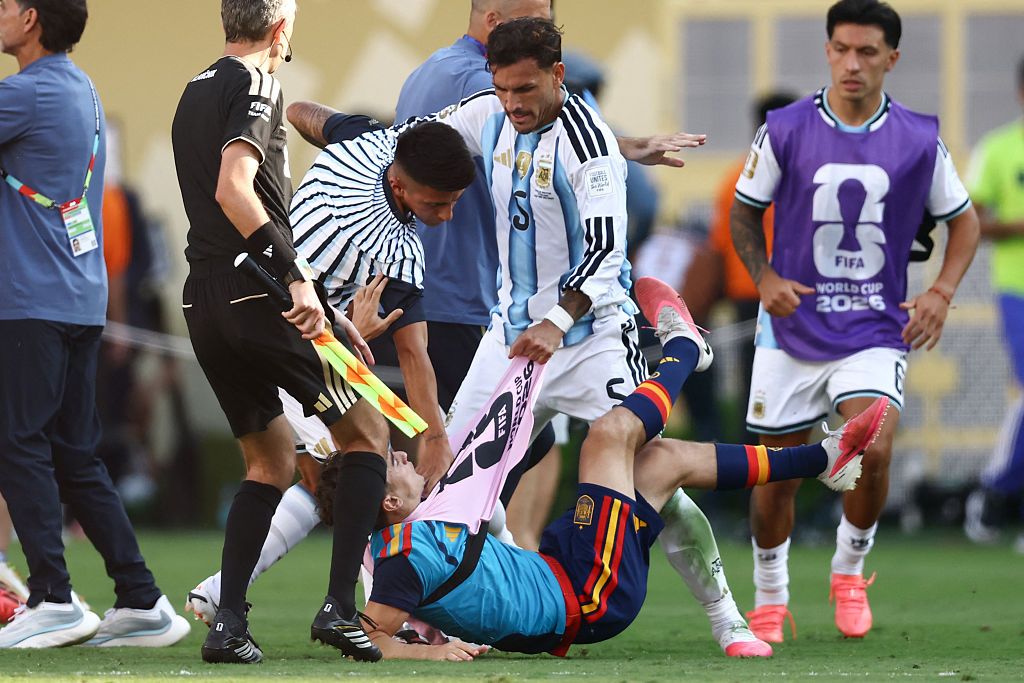
The FIFA has imposed a series of sanctions on the Argentine Football Association (AFA) and several players following disciplinary breaches during the 2026 World Cup, particularly in the post-match altercation following the final on July 19. The AFA has been fined a total of $321,000 (£235,000) for breaches involving discriminatory chants and gestures by supporters, unsporting behaviour, team misconduct, and failures in match order and security. FIFA has also ordered Argentina to limit the capacity of its next home match to 50%.
A second capacity restriction and $100,000 (£73,000) of the fine have been suspended subject to a probationary period, while $100,000 of the total fine must be allocated to an anti-discrimination plan. Individual suspensions have also been handed down to four members of the Argentine staff and team following altercations at the end of the final. Additionally, a Spanish player has also been sanctioned.
Severe sanctions for Argentina and its players
Argentine midfielder Leandro Paredes has been handed a 10-match suspension and a $90,000 (£66,000) fine, while defender Nahuel Molina faces a seven-match ban and a $90,000 fine. Forward Thiago Almada and assistant coach Roberto Ayala have each received one- and three-match suspensions respectively, along with a $30,000 (£22,000) fine. Spanish midfielder Gavi has been given a one-match suspension and a $30,000 fine. FIFA has stated that all match suspensions will be served during the teams’ upcoming international fixtures in September and October. All parties have 10 days to request a reasoned decision before any potential appeals. Part of the sanctions against Argentina relate to the display of a Falklands Islands banner by players and supporters following the semi-final victory over England. Former Tottenham Hotspur midfielder Giovani Lo Celso was photographed with the flag, which FIFA deemed unsporting before it was placed on the pitch in front of Argentine supporters.
A context marked by tensions and controversies
These measures come in a context of persistent tensions surrounding the 2026 World Cup.
FIFA had already faced criticism for the controversial sale of broadcasting rights, while the privatization plan for the World Cup had sparked a revolt among federations.
The governing body had ultimately backed down in the face of opposition from its members. The incidents that occurred during the final, including the altercations between players, have therefore led to these immediate sanctions. World football authorities emphasize that respect for disciplinary rules and sporting values remains an absolute priority, both on and off the pitch. Federations and players are required to ensure exemplary conduct, under penalty of sanctions that could impact their sporting future.
 Antoine Seville · 22 août 2026 · 3 min de lecture